


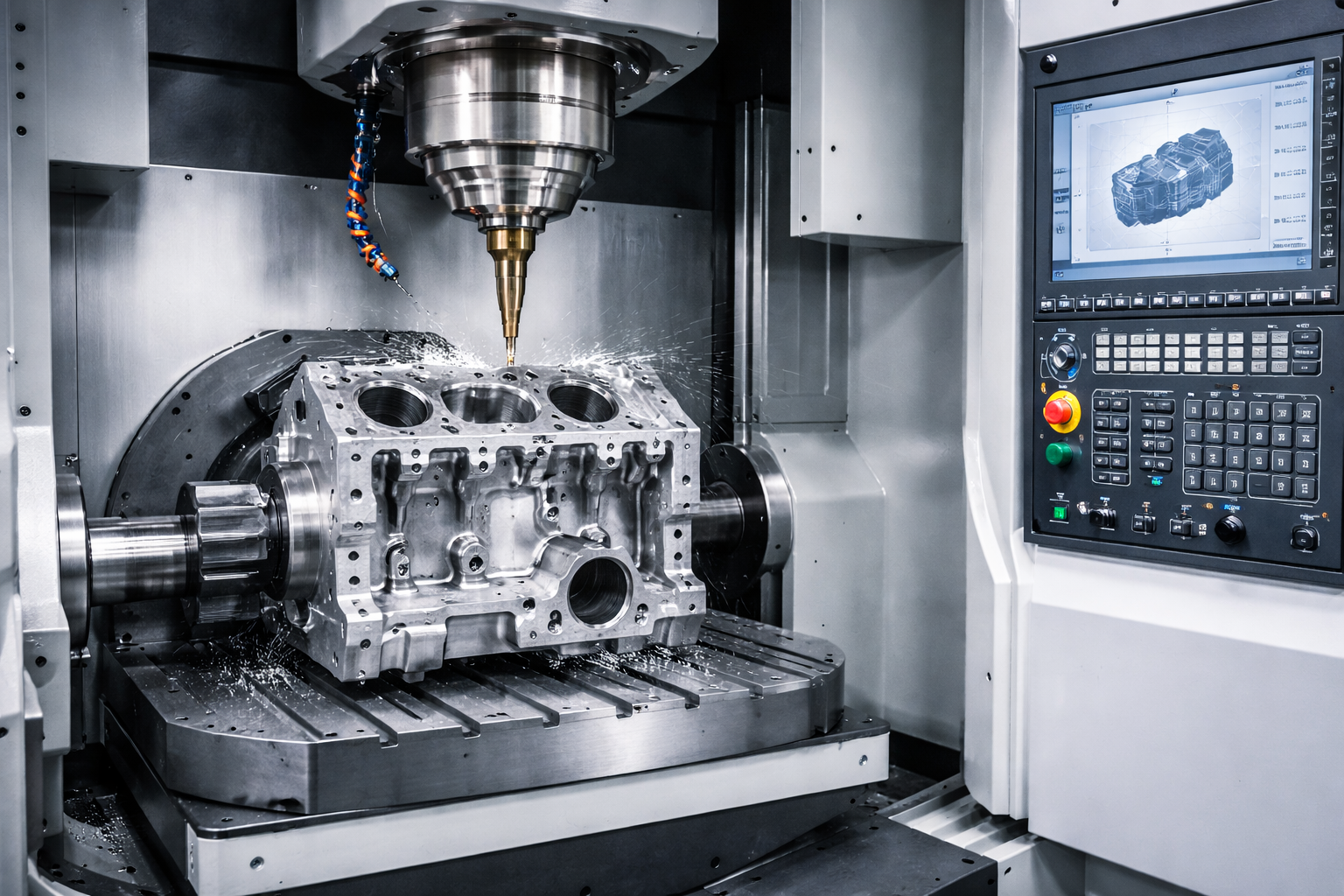
Wenn es um die Präzision beim CNC-Fräsen geht, konzentrieren sich viele auf die Genauigkeit der Maschine.
In Wirklichkeit hängt die Präzision stärker davon ab, wie die Maschine gewartet und der Prozess gesteuert wird.
Selbst eine High-End-CNC-Maschine kann ohne ordnungsgemäße Steuerung keine stabile Präzision liefern.
Das mechanische System muss stabil bleiben
Die Grundlage der Präzision beim CNC-Fräsen ist der mechanische Zustand der Maschine.
Zu den Schlüsselkomponenten gehören:
- Spindellager
- Kugelgewindetriebe
- Linearführungen
Diese Teile müssen regelmäßig auf Verschleiß und Spiel überprüft werden.
Im täglichen Betrieb:
- Späne sollten gereinigt werden
- Schmierung muss konsequent erfolgen
- verschlissene Komponenten sollten rechtzeitig ersetzt werden
Wenn die Vorspannung nicht korrekt ist, nimmt die Positioniergenauigkeit ab.
Spiel und Positioniergenauigkeit sollten regelmäßig überprüft werden, insbesondere bei der Präzisionsbearbeitung.

Bearbeitungsparameter müssen stufenweise angepasst werden
Die Präzision wird auch davon beeinflusst, wie der Bearbeitungsprozess geplant wird.
Ein gängiger Ansatz ist die Unterteilung der Bearbeitung in Stufen:
- Schruppen: Entfernung von 70 %–80 % des Materials
- Schlichten: Nur 0,005–0,01 mm für den letzten Schnitt belassen
Diese Methode hilft, die Schnittspannung zu reduzieren und die Dimensionsstabilität zu verbessern. Stabiles Schnittverhalten führt zu einer besseren CNC-Fräspräzision.
Temperatur und Vibration müssen kontrolliert werden
Temperatur und Vibration sind zwei wichtige versteckte Faktoren.
Wenn die Temperatur nicht stabil ist:
- dehnt sich die Maschinenstruktur aus
- ändert sich die Werkzeuglänge
- verschieben sich die Teileabmessungen
Wenn Vibrationen vorhanden sind:
- nimmt die Oberflächenqualität ab
- wird die Maßgenauigkeit instabil
Um dies zu kontrollieren:
- die Werkstatt-Temperatur stabil halten
- Maschinen nicht in der Nähe von Vibrationsquellen aufstellen
- bei Bedarf Vibrationsisolation verwenden
Für eine hohe CNC-Fräspräzision dürfen diese Faktoren nicht ignoriert werden.
CNC-Fräsen vs. CNC-Drehen
Wenn man über die Präzision beim CNC-Fräsen spricht, ist es auch hilfreich zu verstehen, wie sich Fräsen vom Drehen unterscheidet.
Beim CNC-Fräsen wird ein rotierendes Schneidwerkzeug verwendet, um Material von einem festen oder kontrollierten Werkstück zu entfernen. Es eignet sich besser für Teile mit ebenen Flächen, Taschen, Nuten, Konturen und komplexen 3D-Geometrien.
Beim CNC-Drehen rotiert das Werkstück, während sich das Schneidwerkzeug entlang des Teils bewegt. Es wird hauptsächlich für runde oder zylindrische Teile wie Wellen, Hülsen und Gewindekomponenten verwendet.
Hinsichtlich der Präzisionskontrolle achtet das Fräsen oft mehr auf:
- Werkzeugwegstrategie
- Fräserablenkung
- Konturgenauigkeit
Das Drehen konzentriert sich normalerweise mehr auf:
- Spindelstabilität
- Rundlaufgenauigkeit
- Durchmessersteuerung
Deshalb werden die Präzision beim CNC-Fräsen und die Präzision beim CNC-Drehen unterschiedlich kontrolliert, obwohl beides CNC-Bearbeitungsprozesse sind.

Echtzeitmessung ist notwendig
Präzision kann sich nicht nur auf die Einrichtung verlassen.
Sie muss während der Produktion überprüft werden.
Bei wichtigen Bearbeitungsschritten:
- Inspektionspunkte sollten definiert werden
- kritische Abmessungen sollten überprüft werden
Gängige Werkzeuge sind:
- KMG (Koordinatenmessmaschine)
- In-Prozess-Messsysteme

Ein nachvollziehbares System hilft, schnell zu erkennen, wo eine Abweichung beginnt.
Dies reduziert Risiken in der Serienproduktion und verbessert die Konsistenz.
Tägliche Wartung ist Teil der Präzisionskontrolle
Wartung ist nicht optional.
Sie ist Teil der Aufrechterhaltung der Präzision beim CNC-Fräsen.
Die typische Routine umfasst:
- tägliche Spänereinigung
- regelmäßige Schmierung
- Wartung der stillstehenden Maschine alle 2–3 Tage
Ohne konsequente Wartung verschlechtert sich die Maschinengenauigkeit im Laufe der Zeit.

Fazit
Die Präzision beim CNC-Fräsen wird nicht allein durch die Maschine erreicht.
Sie hängt ab von:
- Zustand des mechanischen Systems
- richtiger Bearbeitungsstrategie
- Temperatur- und Vibrationskontrolle
- Echtzeitmessung
- konsistenter Wartung
Jeder dieser Faktoren beeinflusst direkt, ob ein Teil enge Toleranzen erfüllen kann.


Aktie:
CNC-Bearbeitung für Präzisionsoptik: Wenn CNC-Optik auf Toleranzen im Mikrometerbereich trifft
Biegung eines optischen Spiegelhalters: Design- und Präzisionsbearbeitungsaspekte