


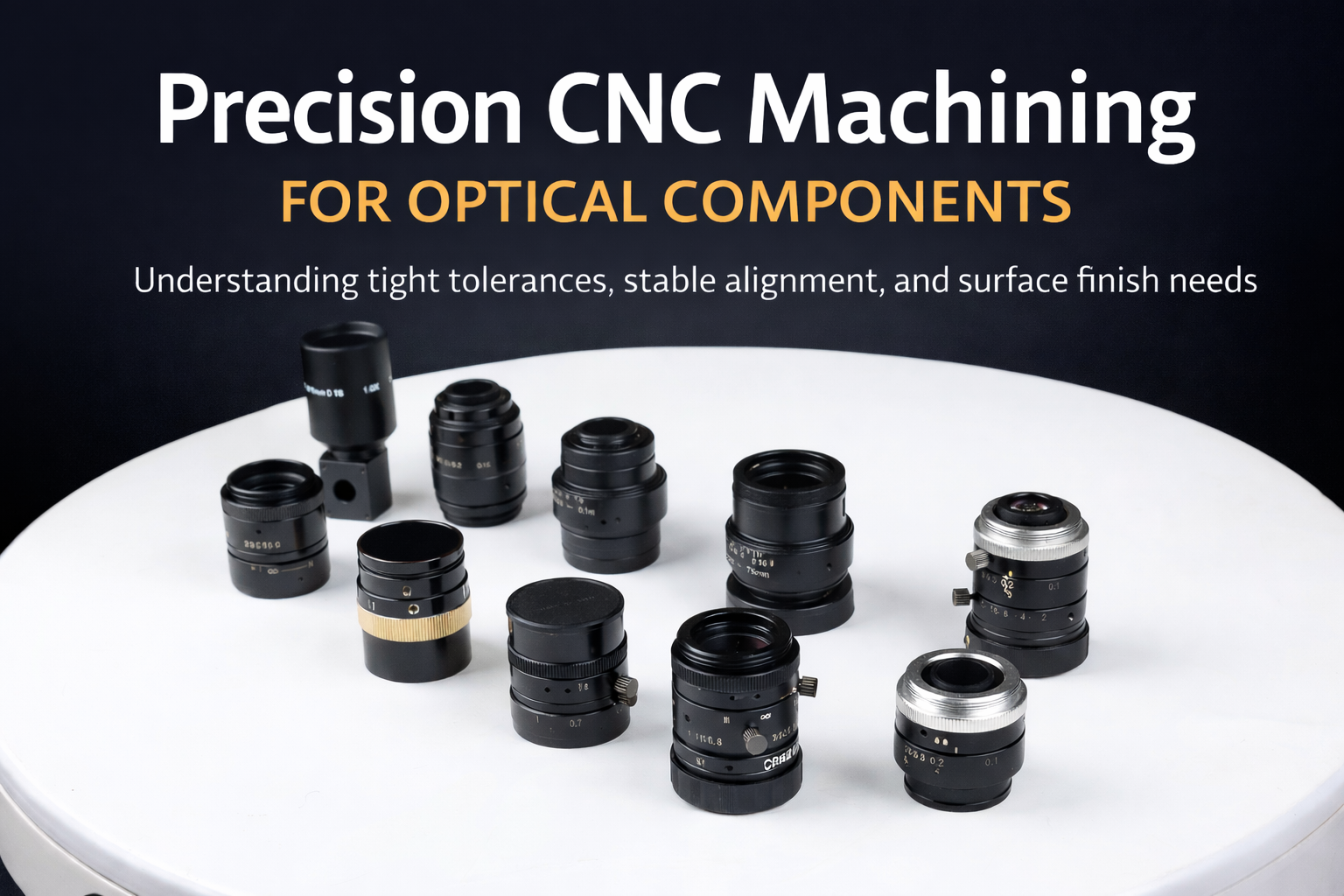
When an optical product fails, the cause is often not the lens itself, but the metal part around it. A small size error, poor surface finish, or weak assembly fit can affect the final result.
That is why choosing the right precision CNC machining supplier for optical components matters from the very beginning.
Whether you are developing a new optical device or improving an existing one, CNC machining is often one of the most flexible ways to make custom parts quickly and accurately.
So check it out! Find the suitable supplier for yourself after reading this article.
What Is Precision CNC Machining for Optical Components?
Precision CNC machining is a manufacturing process that removes material from metal or plastic to create custom parts with tight control over size and shape.
For optical components, this process is used to make the mechanical parts that hold, position, and protect sensitive optical elements.
These parts are commonly found in products such as imaging devices, laser systems, inspection equipment, medical instruments, and semiconductor tools.
Some typical examples include lens mounts, optical housings, camera brackets, mirror holders, and alignment structures.

Why Precision Matters in Optical Parts
Optical systems depend on stability. Even if the lens quality is excellent, the final performance can still suffer when the surrounding metal parts are not made well.
A small deviation in a housing or mount may lead to poor alignment, weak assembly, or reduced consistency in the finished product.
In many optical assemblies, critical dimensions may need to be controlled within ±0.01 mm, while features such as flatness, concentricity, and coaxiality can also directly affect alignment performance.
This is why optical parts often require better control than common industrial components. The part must match the drawing, but it must also work properly during assembly and long-term use.
Good machining helps maintain fit, support alignment, and reduce the risk of movement or distortion.
In simple terms, precision matters because optical products are built as systems. A lens alone cannot do the job. The surrounding structure must also be accurate, clean, and stable.
Common Optical Components Made by CNC Machining
CNC machining is suitable for a wide range of optical support parts. These components may look simple from the outside, but they often have strict demands in terms of fit, flatness, appearance, and repeatability.
- Optical housings for lenses, sensors, and imaging modules
- Lens mounts and threaded retaining parts
- Mirror holders and support frames
- Camera and detector brackets
- Alignment blocks and positioning structures
- Custom mechanical parts for laser and inspection systems
Key Machining Capabilities for Optical Components
A good supplier does more than cut metal.
Optical projects often require careful control during the whole process, from programming and fixturing to finishing and inspection.
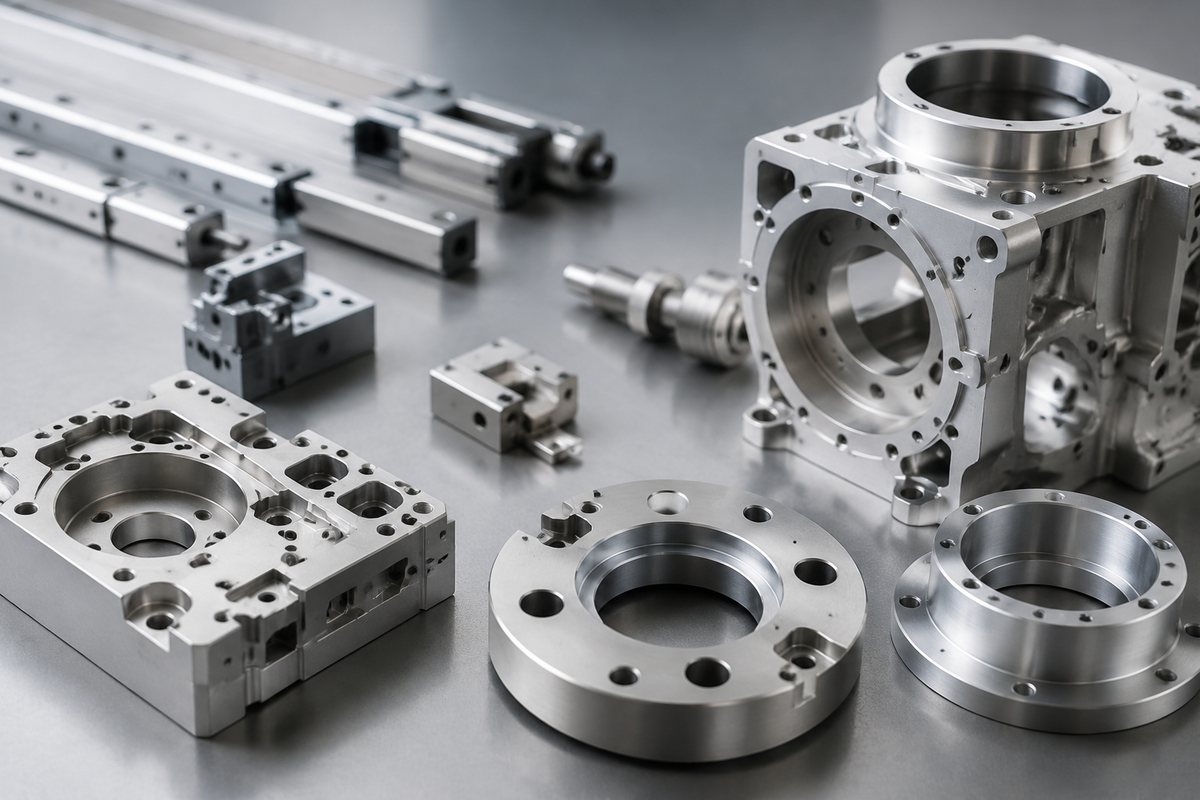
Multi-axis machining is helpful for complex shapes and features on different sides of a part.
Milling is commonly used for housings, frames, and flat structural parts, while CNC turning is useful for round components such as rings, sleeves, and threaded holders. In many projects, a part may need both processes to reduce setup error and improve overall accuracy.
Surface treatment is also important. Black anodizing, sandblasting, polishing, and other finishing steps can affect both appearance and function.
For some optical support parts, the surface finish may also need to be controlled to around Ra 0.8–1.6 μm, depending on the application.
In optical products, surface quality is often linked to assembly performance and light control.

How to Choose a Reliable Precision CNC Machining Supplier
Not every machine shop is a good fit for optical work.
A strong supplier should understand that these parts are not just only metal pieces, but also are functional parts inside a sensitive system.
Look for a supplier that can communicate clearly, review drawings carefully, and support both prototype and production stages.
It is also useful when the supplier understands appearance standards, assembly needs, and practical tolerance control rather than only quoting from the drawing.
A reliable supplier should ideally offer:
- Experience with optical, imaging, laser, or precision device parts
- Stable machining quality for both small and large batches
- Inspection support for critical dimensions
- Surface finishing options suitable for optical applications
- Engineering feedback before production starts
Our Approach to Optical CNC Machining
For optical components, machining is not only about making a part to size.
It is about understanding how that part will be used in the full product which inclxudes assembly requirements, appearance expectations, material behavior, and delivery timing.
A practical supplier should be able to support prototype development, suggest better manufacturing methods when needed, and maintain stable quality as the order moves into production.
Fast response is especially important for optical projects, where development cycles are often tight and design changes may happen along the way.
XY-Global has the ability of manufacturing custom optical parts while provides the free prototype and lifetime warranty. Come and get a quote of your personalized parts!
Conclusion
Choosing a precision CNC machining supplier for optical components is about more than finding a shop that can machine parts.
It is about finding a partner that understands fit, stability, appearance, and real-world production needs.
Good optical performance starts with good mechanical support. When the surrounding parts are made well, assembly becomes smoother, quality becomes more stable, and the final product becomes more reliable.
If you are developing custom optical components, it is worth reviewing your drawings, tolerance priorities, material choices, and machining plan with an experienced supplier before production starts.


Share:
Chinese Machine Shop: How to Choose the Right Supplier for Precision Manufacturing
Custom CNC Optical Components : What Buyers Should Know Before Sourcing