


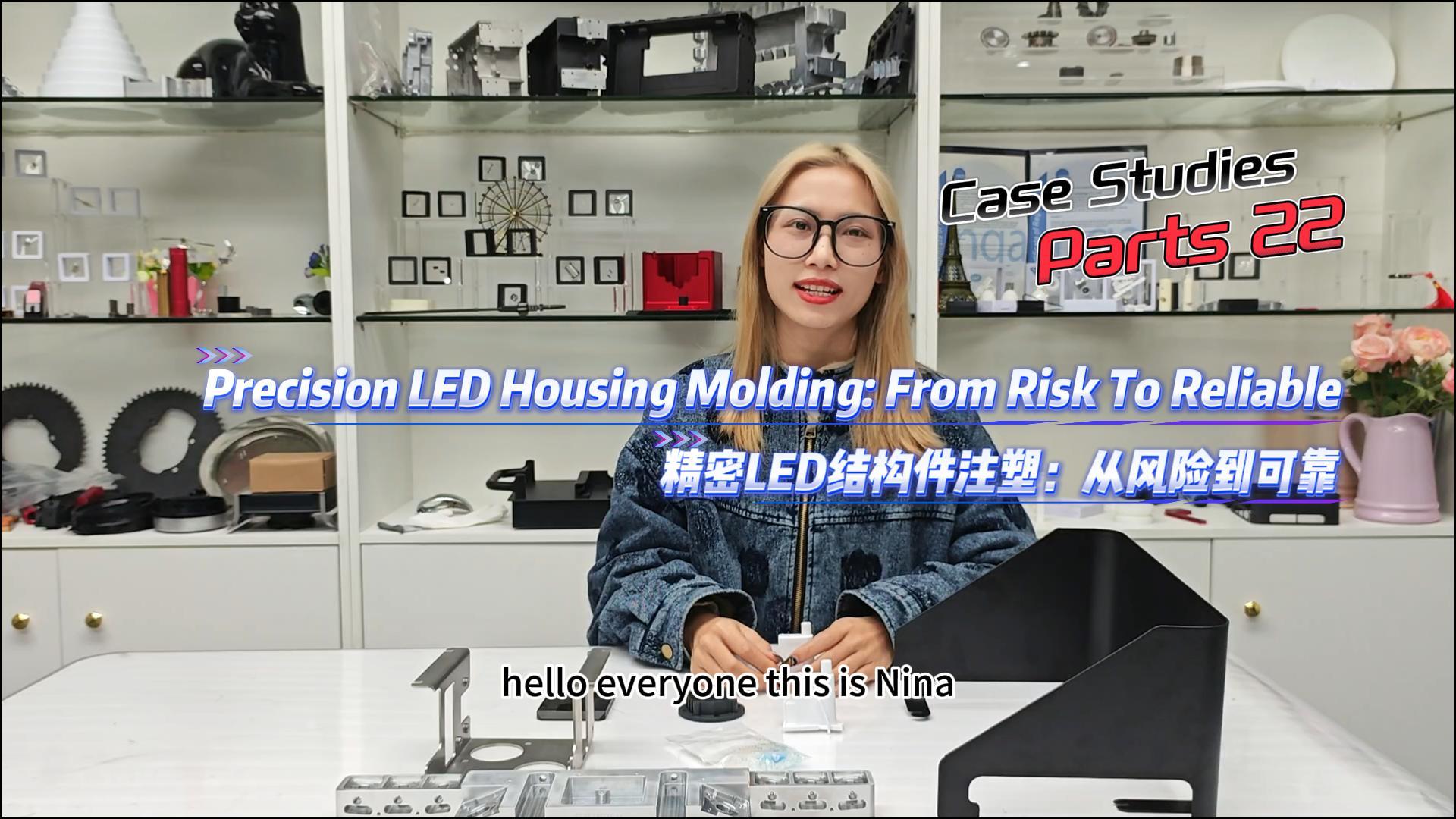
📺 Projektvideo:
Projekthintergrund
Dieses Projekt wurde für einen US-amerikanischen Hersteller von Hochleistungs-LED-Beleuchtungssystemen für architektonische und gewerbliche Umgebungen entwickelt.
Bei diesen Anwendungen sind zwei Dinge unabdingbar:
-
Strukturelle Stabilität
-
Konsistenz des Erscheinungsbildes
Auch interne Strukturbauteile müssen strenge Maß- und Sichtnormen erfüllen, um eine zuverlässige Montage und lange Lebensdauer zu gewährleisten.
Die von uns gelieferte Komponente
Wir lieferten ein präzisionsgespritztes Strukturbauteil, das im Inneren der LED-Beleuchtungseinheit zur Unterstützung und Positionierung verwendet wird.
Obwohl es sich nicht um ein äußeres Dekorationselement handelt, wünschte der Kunde Folgendes:
✅ Stabile Abmessungen
✅ Reibungslose Montagepassung
✅ Saubere, geformte Oberfläche
✅ Keine sichtbaren kosmetischen Mängel
Dies stellte hohe Anforderungen sowohl an die Werkzeugkonstruktion als auch an die Prozesssteuerung beim Spritzgießen.
Materialauswahl: Warum PC-Spritzguss?
Das Bauteil wird aufgrund seiner ausgewogenen Eigenschaften im PC-Spritzgussverfahren (Polycarbonat) hergestellt:
-
Hohe mechanische Festigkeit
-
Gute Hitzebeständigkeit
-
Hohe Dimensionsstabilität
-
Geeignet für die langfristige strukturelle Unterstützung
Für LED-Systemkomponenten, die Hitze und Dauerbetrieb ausgesetzt sind, bietet PC-Material eine zuverlässige Leistung über die Zeit.
Kundenanforderungen – klar und streng
Von Anfang an hat der Kunde detaillierte Abnahmekriterien für die geformten LED-Strukturteile festgelegt:
Abmessungen
-
Stabile kritische Dimensionen
-
Kontrollierte Toleranzen für Montagemerkmale
-
Gleichbleibende Wiederholbarkeit zwischen den Chargen
Anforderungen an das Erscheinungsbild
-
Keine Durchflussleitungen
-
Keine Einsinkspuren
-
Keine Farbabweichungen
-
Gleichmäßige Oberflächenqualität
Produktionsanforderungen
-
Vorhersehbarer Lieferplan
-
Stabiles Prozessfenster
-
Niedrige Fehlerrate
Dies war nicht nur ein Formgebungsauftrag – es war eine Herausforderung hinsichtlich der Prozessstabilität .
Die zentrale Herausforderung
Die größte Schwierigkeit bestand darin, das Gleichgewicht zu halten:
Strukturelle Leistungsfähigkeit vs. kosmetische Konsistenz
Beim PC-Spritzgießen kann die Verbesserung der Festigkeit und des Füllverhaltens manchmal das Risiko von Folgendem erhöhen:
-
Fließmarken
-
Oberflächenvariation
-
Innerer Stress
-
Sehfehler
Das bedeutete, dass eine frühzeitige Prozessstrategie von entscheidender Bedeutung war.
Wie wir es gelöst haben
Wir haben Risiken frühzeitig durch einen strukturierten Entwicklungsansatz für Spritzgussformen angegangen:
✔ Frühe Schimmelpilzversuche
Zur Validierung des Füllverhaltens und der Angussleistung wurden mehrere Formversuche durchgeführt.
✔ Prozessoptimierung
Wir haben optimiert:
-
Einspritzgeschwindigkeitsprofil
-
Schmelztemperaturfenster
-
Packungsdruckregelung
-
Kühlungsgleichgewicht
✔ Überprüfung kritischer Merkmale
Wichtige Struktur- und Montagemerkmale wurden bereits in frühen Testläufen gemessen und verifiziert, um Risiken in späteren Phasen vorzubeugen.
Dadurch wurden die Anpassungszyklen bei der Massenproduktion reduziert.
Produktionsergebnisse
Nach Prozessoptimierung und -validierung wurden folgende Ergebnisse bei den finalen Spritzgussteilen erzielt:
✅ Stabile Abmessungen
✅ Zuverlässige Montagepassung
✅ Sauberes und einheitliches Erscheinungsbild
✅ Keine sichtbaren Formfehler
✅ Gleichbleibende Qualität von Charge zu Charge
Sowohl die funktionalen als auch die kosmetischen Anforderungen wurden erfüllt.
Das Kundenfeedback war positiv, und das Projekt entwickelte sich zu einer fortgesetzten Zusammenarbeit.
Warum dieses Spritzgussprojekt wichtig ist
Dieser Fall zeigt, dass es beim erfolgreichen Präzisionsspritzgießen von LED-Strukturbauteilen nicht nur um die Herstellung von Teilen geht, sondern vor allem um die Kontrolle des Prozesses.
Wenn Aussehen, Toleranz und Zuverlässigkeit gleichzeitig gegeben sein müssen, machen die frühzeitige Einbindung der Ingenieure und die Disziplin im Prozess den Unterschied.
Benötigen Sie kundenspezifische, spritzgegossene Strukturbauteile?
Wir unterstützen unsere Kunden mit:
-
PC-Spritzguss
-
Präzisions-Kunststoffbauteile
-
Erscheinungsbildkontrollierte Formteile
-
LED- und Elektronikbauteile
-
Kundenspezifisches Spritzgießen nach Zeichnungen
📩 Falls Sie ein ähnliches Projekt haben, senden Sie uns gerne Ihre Zeichnungen oder Spezifikationen zu.
Unser Ingenieurteam wird Ihren Produktionsplan prüfen und unterstützen.


Aktie:
Eine Geschichte von Integrität hinter einer kleinen Stichprobe
Ingenieurdienstleistungen: Kapazitäts- und Produktionskontrolle für die Präzisionsfertigung