


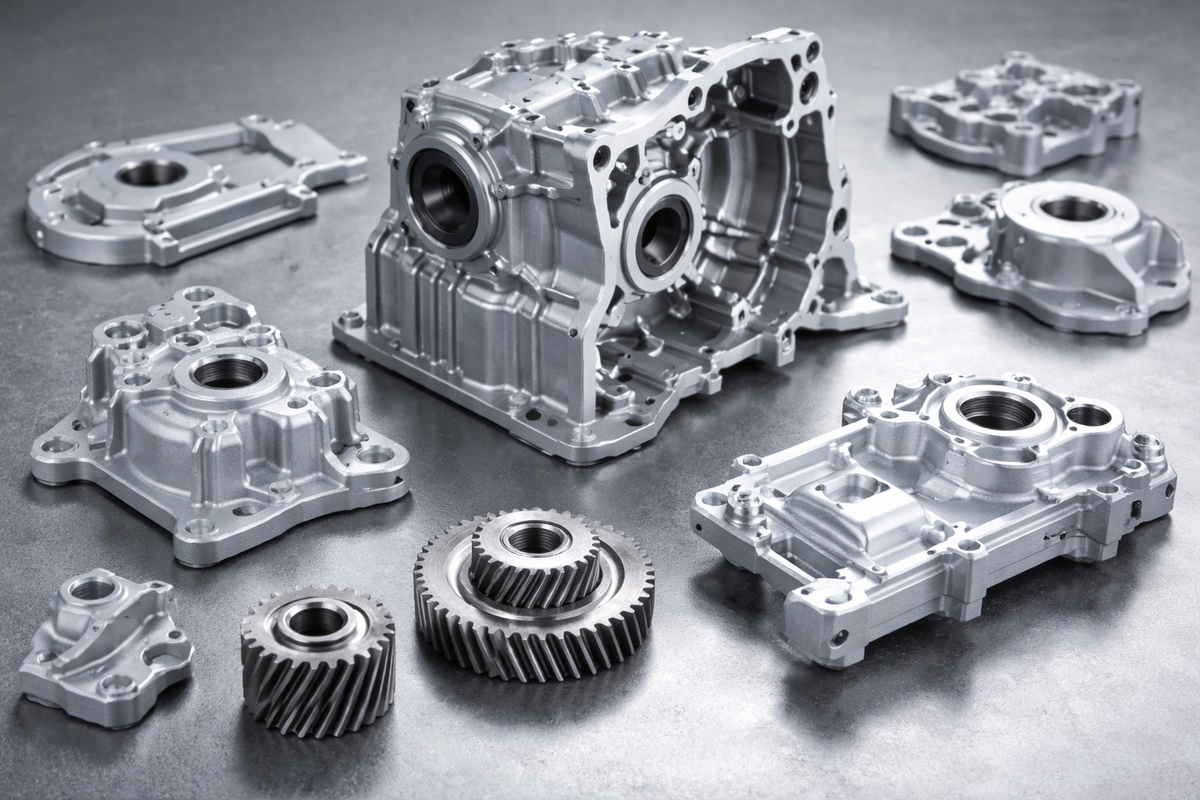
When selecting a custom die-casting mold manufacturer, many buyers focus on the tooling price first.
However, the real cost of a die-casting project is not only the mold price. A mold that fails early can create much higher costs through production downtime, repair, quality issues, and delayed delivery.
For mass production, mold life is one of the most important factors when choosing a die-casting tooling supplier.
At XY-GLOBAL, we focus on designing and manufacturing die-casting molds that provide stable performance throughout production.

Why Die-Casting Mold Life Matters
A die-casting mold works in a very challenging environment.
During aluminum die casting, the mold repeatedly experiences:
- High-temperature molten metal contact
- Rapid heating and cooling cycles
- High injection pressure
- Continuous mechanical impact
For example, in aluminum high-pressure die casting, molten aluminum is injected into the mold at temperatures around 670–710°C under high pressure. These repeated thermal cycles create stress inside the mold steel and gradually lead to cracks and wear.
The most common failure issue is thermal fatigue, also called heat checking.
Typical problems include:
- Small cracks appearing on the cavity surface
- Surface defects on cast parts
- Dimensional changes
- Increased maintenance frequency
A mold may produce good samples at the beginning, but poor mold design can cause problems after thousands of production cycles.

What Determines Die-Casting Mold Life?
A longer mold life does not depend on only one factor. It comes from the combination of material selection, mold design, and manufacturing quality.
1. Choosing the Right Mold Steel
The mold material directly affects durability.
For aluminum die-casting molds, commonly used hot-work steels include:
- H13
- SKD61
- 1.2344
These materials are selected because they can withstand repeated temperature changes and mechanical stress.
For example, H13 tool steel is widely used for aluminum die-casting molds because of its good balance of:
- High-temperature strength
- Wear resistance
- Thermal fatigue resistance
Research shows that thermal fatigue cracking is one of the major reasons for die-casting mold failure, especially under repeated heating and cooling conditions.
2. Mold Cooling Design
Cooling design has a direct impact on mold performance.
A poor cooling system can create uneven temperatures inside the mold.
This may cause:
- Higher thermal stress
- Faster crack development
- Shorter mold life
- Longer cycle time
During mold design, we consider:
- Cooling channel location
- Heat concentration areas
- Part structure
- Casting cycle requirements
A balanced cooling system helps maintain stable mold temperature and improves production consistency.

3. Mold Design Before Tooling
Many mold problems are created before machining starts.
A good die-casting mold design should consider:
- Parting line position
- Metal flow direction
- Draft angle
- Ejection structure
- Potential stress areas
Through DFM review, engineers can identify possible risks before mold manufacturing begins.
This helps reduce:
- Trial-and-error modifications
- Production delays
- Unexpected repair costs
How XY-GLOBAL Helps Improve Mold Reliability
As a custom die-casting mold manufacturer, XY-GLOBAL provides support from tooling development to production.
Our process includes:
Engineering Review
Before mold production:
- Review 3D models and drawings
- Check manufacturability
- Optimize mold structure
Precision Tooling
We focus on:
- Accurate mold machining
- Proper mold assembly
- Stable cavity dimensions
Production Validation
Before mass production:
- Trial casting
- Dimensional inspection
- Sample validation
This ensures the mold is ready for stable production instead of only producing a successful first sample.
How Long Can a Die-Casting Mold Last?
The actual mold life depends on:
- Casting material
- Part complexity
- Mold design
- Production conditions
- Maintenance
For aluminum die-casting molds made with suitable tool steel and proper process control, typical service life can reach tens of thousands to over 100,000 shots, depending on part design and operating conditions.
However, a cheaper mold does not always mean lower cost.
A mold with shorter life may require:
- More frequent repair
- Production interruption
- Additional tooling investment
A well-designed mold reduces the total cost throughout the product lifecycle.

Choose a Custom Die-Casting Mold Manufacturer That Understands Production
A die-casting mold is not just a tool. It is a long-term investment for your production.
At XY-GLOBAL, we combine mold engineering, precision machining, die casting, CNC machining, and quality inspection to support customers from prototype development to mass production.
If you have a new die-casting project, send us your 3D model or drawing. Our engineers can review your design and provide tooling suggestions.


Aktie:
High Pressure Die Casting: Process, Materials, Benefits & Applications