


Custom Micro Molding Services
Get high-precision custom micro molded parts with our expert micro injection molding service. Offer 24h instant quotes, free DFM reviews, and micron-level manufacturing with ±0.001mm tolerances and 0.3mm minimum wall thickness. From specialized micro-tooling design to seamless high-volume production—order your precision micro-scale components today!
What is Micro Molding?
Micro molding is a highly specialized injection molding process engineered for the fabrication of miniature, complex components with micron-level precision. As a sophisticated subset of traditional molding, it is specifically tailored to produce components weighing less than 1g and measuring within a few millimeters, enabling the consistent achievement of tight tolerances of ±0.001mm or better.
By leveraging micromolding machinery and high-performance resins like PEEK and LCP, this process enables the mass production of intricate geometries—such as 0.3mm thin-wall sections and complex micro-holes—while maintaining incredible consistency. Our in-house micro-tooling design (CNC/EDM) ensures that even the most ambitious designs are bridgeable to large-volume manufacturing. From microfluidic devices and mini-connectors to integrated circuit components, XY-GLOBAL delivers cost-effective excellence across the Medical, Electronics sector, and beyond.
Micro Molding Material Options
Micro molding materials focus on high-flow engineering thermoplastics optimized for tiny shot sizes and micron precision. From medical-grade PEEK for implants to LCP for 3C connectors, we cover 15+ materials for your custom micro molded components.
Polyether Ether Ketone (PEEK)
A premier high-performance thermoplastic for extreme engineering applications.
- Property: heat resistance exceeding 260°C and medical-grade biocompatibility.
- Application: implants, microfluidic chips, surgical tools.
Liquid Crystal Polymer (LCP)
An advanced melt-processable liquid crystal thermoplastic.
- Property: ultra-low warpage and exceptional flow for <0.3mm walls.
- Application: 3C connectors, antenna modules, RF components.
Polyphenylene Sulfide (PPS)
A semi-crystalline super-engineering thermoplastic.
- Property: chemical resistance to acids/alkalis and 240°C stability
- Application: chemical sensors, automotive connectors, fuel system parts
Polyetherimide (PEI)
An amorphous high-temperature thermoplastic with aerospace heritage.
- Property: continuous 170°C use and inherent UL94 V-0 flame retardancy
- Application: aircraft electricals, high-reliability connectors
Polysulfone (PSU)
A transparent thermoplastic engineered for medical sterilization.
- Property: hydrolytic stability and 1000+ autoclave cycles
- Application: medical filters, surgical trays, diagnostic equipment
Polycarbonate (PC)
The toughest transparent thermoplastic for structural optics.
- Property: 250x glass impact strength and 88-90% optical clarity
- Application: micro-lenses, protective covers, wearable optics
Polymethyl Methacrylate (PMMA)
The optical-grade thermoplastic known as engineering acrylic.
- Property: 92% light transmission and mirror-polish finish
- Application: precision optics, micro-prisms, endoscopic lenses
Polyamide (PA/Nylon)
The workhorse engineering thermoplastic for functional parts.
- Property: 80 MPa tensile strength and excellent fatigue resistance
- Application: functional hinges, snap-fits, structural components
Polyoxymethylene (POM)
The dimensional stability champion among thermoplastics.
- Property: 0.1-0.3 friction coefficient and <0.5% dimensional change
- Application: micro-gears, cams, precision bearings
Micro Molding Applications
Micro molding excels in producing intricate, micron-scale plastic components essential for high-precision industries like medical devices, electronics, and microfluidics. These applications leverage its tight tolerances, thin walls, and material versatility to enable innovations from implantable sensors to 3C connectors.

Medical Devices
Medical devices rely on micro molding for its micron-level precision and biocompatibility, ensuring patient safety in regulated environments like ISO 13485 cleanrooms. This makes it ideal for miniaturized, high-volume parts that traditional machining can't match economically.
Key Applications
- Implants and catheter components
- Drug delivery systems
- Diagnostic microfluidics
- Surgical tools and wearables
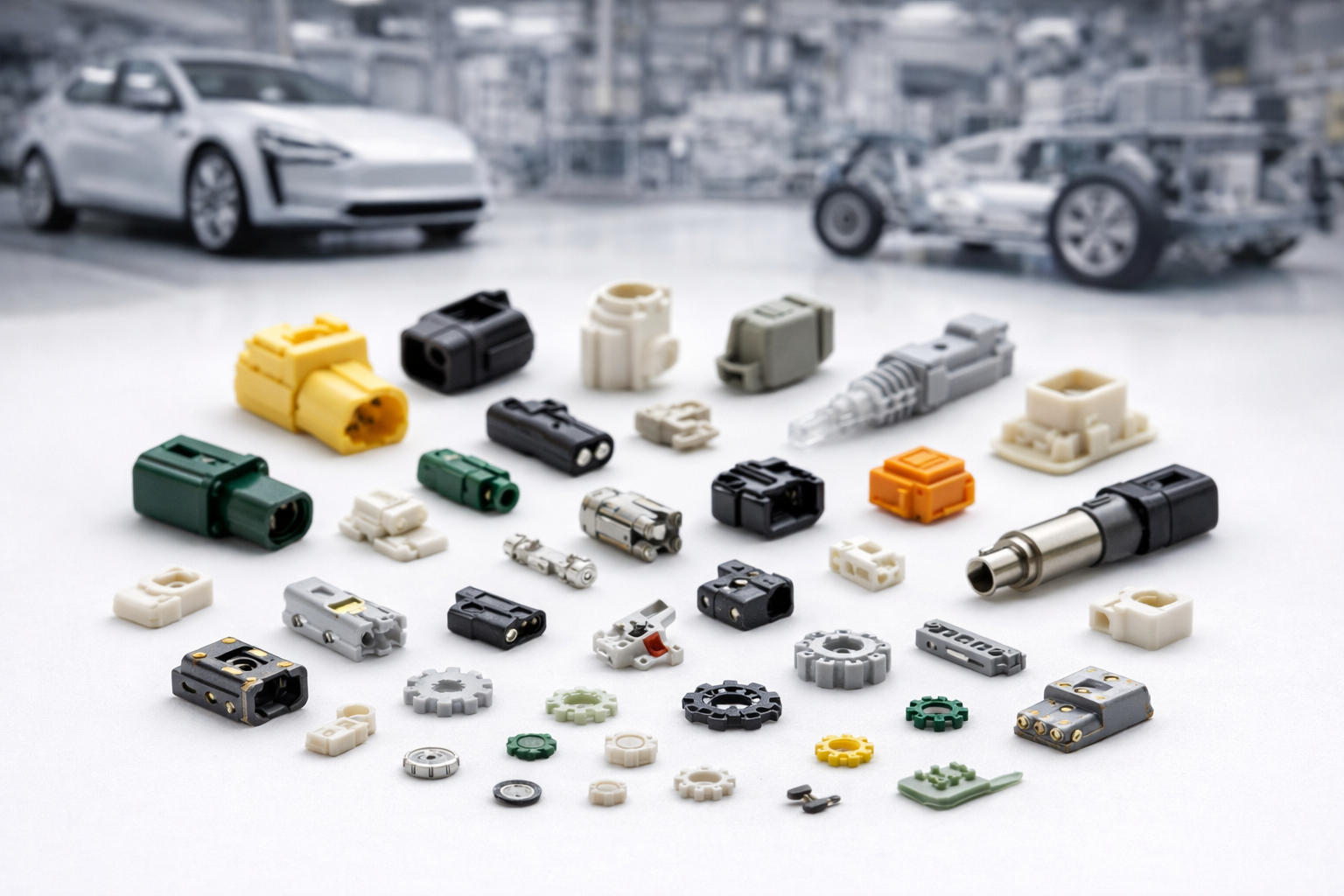
Automobile
Automotive industry widely adopts micro molding to achieve lightweight designs, improve fuel efficiency, and meet precision electronics needs in EVs and ADAS systems.
Key Applications
- Micro gears and fuel injector nozzles
- Sensors and actuator components
- Airbag and connector parts
Common Materials
PPS, PA, LCP for high temperature and strength.
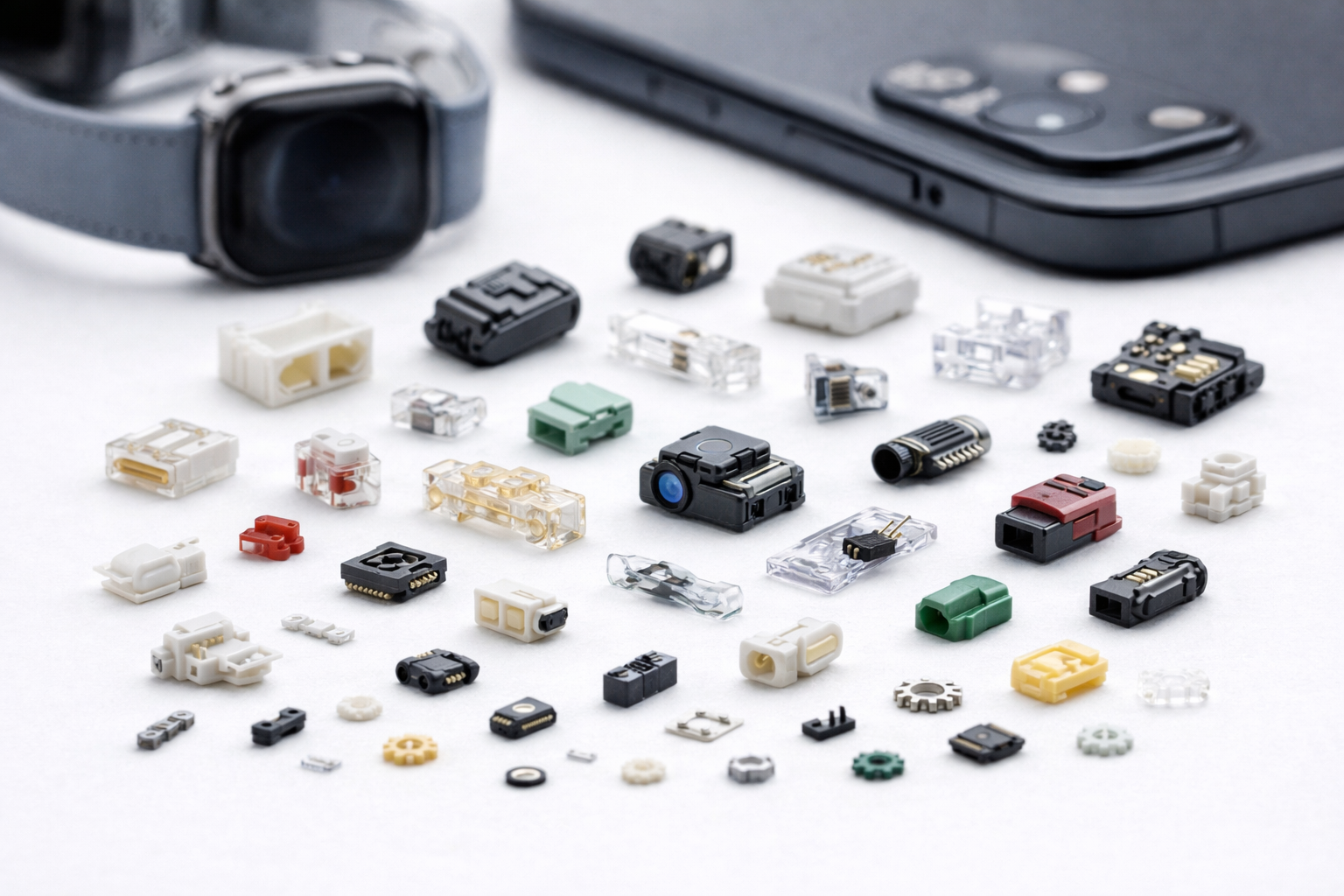
Electronics
Electronics demand micro molding for its high precision and miniaturization capabilities, enabling smaller, lighter devices with reliable performance in compact designs. This process supports complex micro-features at scale, outperforming traditional methods for high-volume consumer tech.
Key Applications
- Connectors and chip packaging
- Micro-optical lenses (e.g., smartphone cameras)
- Sensor housings and MEMS
- Switches, plugs, and wearables

Optics
Optics leverage micro molding for its ability to produce high-clarity, lightweight lenses with micron precision and complex micro-structures, replacing glass in compact, mass-produced devices.
Key Applications
- Smartphone camera lenses and AR/VR optics
- Micro-prisms and light guides
- Fiber optic connectors
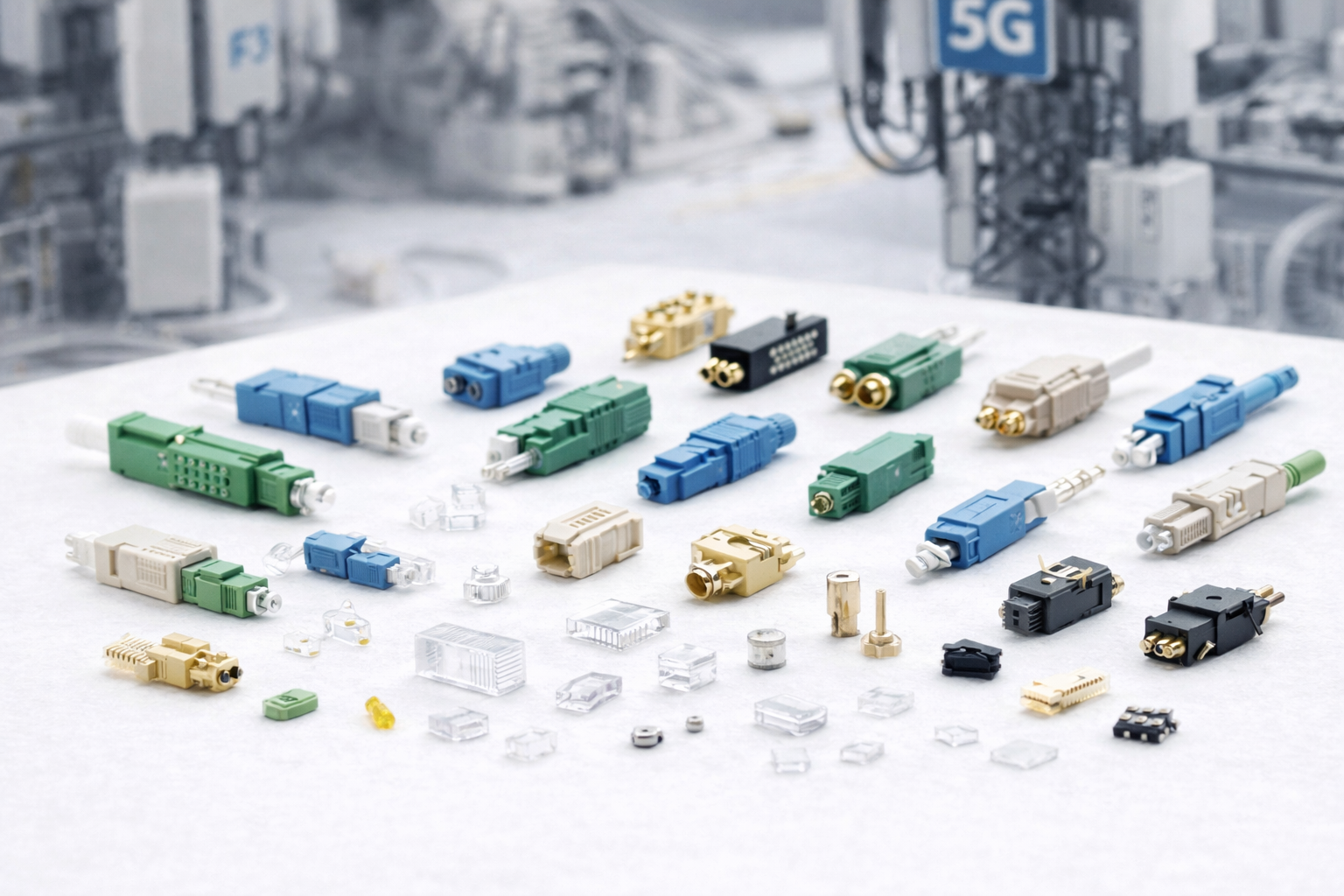
Telecommunication
Telecom uses micro molding for high-reliability, compact connectors that ensure signal integrity in fiber optic networks and 5G infrastructure.
Key Applications
- Fiber optic connectors
- Antenna components
- High-speed switches

Why Choose XY-GLOBAL for Micro Molding Services?
We deliver production-grade micro molding with zero MOQ and ISO 9001/13485 certified processes, spanning sub-mg prototypes to million-piece runs.
Precision Engineering Capabilities: Achieve ±1µm tolerances, 0.3mm ultra-thin walls, and 0.08mm micro-holes. Our SPC-controlled processes ensure stability across shot weights from 0.08mg medical dosing to 0.5g precision components.
15+ Engineering-Grade Materials: From biocompatible PEEK to high-flow LCP—ensuring maximum structural integrity and full resin-to-part traceability for every micro-component.
Advanced Quality & Validation Systems:
Deliver 99.8% yields through IQ/OQ/PQ validated processes, backed by Micro-CT and 3D metrology. Accelerate your launch with 7-day T1 samples and free 24h DFM analysis to eliminate gating and thin-wall risks before mass production.
Micro Molding FAQs
1. What is micro molding?
Micro molding creates tiny plastic parts, typically under 1mm, for medical devices, electronics, and microfluidics using specialized injection processes.
2. What sizes and tolerances can you achieve?
Minimum part sizes range 0.3–20mm, walls 0.15–0.3mm, holes 0.1mm+; tolerances ±0.01–0.02mm standard, ±3µm on critical features via SPC.
3. Which materials do you support?
PEEK, LCP, PPS, PC, PA, PEI, and 20+ high-flow thermoplastics; LSR for seals—all optimized for thin walls and <1cm³ shots.
4. What are your typical lead times for micro molding?
For most projects, prototype molds take about 3 days, and initial sample parts are usually ready in a week. Production then scales up seamlessly from those approved samples.
5. Do you have a minimum order quantity (MOQ)?
There is no MOQ for trial or prototype runs, so you can start with small quantities to validate your design before committing to full production.
6. When does micro molding become more cost-effective than CNC machining?
For complex geometries, high-volume runs of around 5,000 pieces or more can reduce per-part costs by over 50% compared with CNC machining.